A companion piece, covered separately, described the birth of the Anser putter — a 1966 sketch on a record sleeve, its offset and cavity-back design, and the design patent granted in 1967.
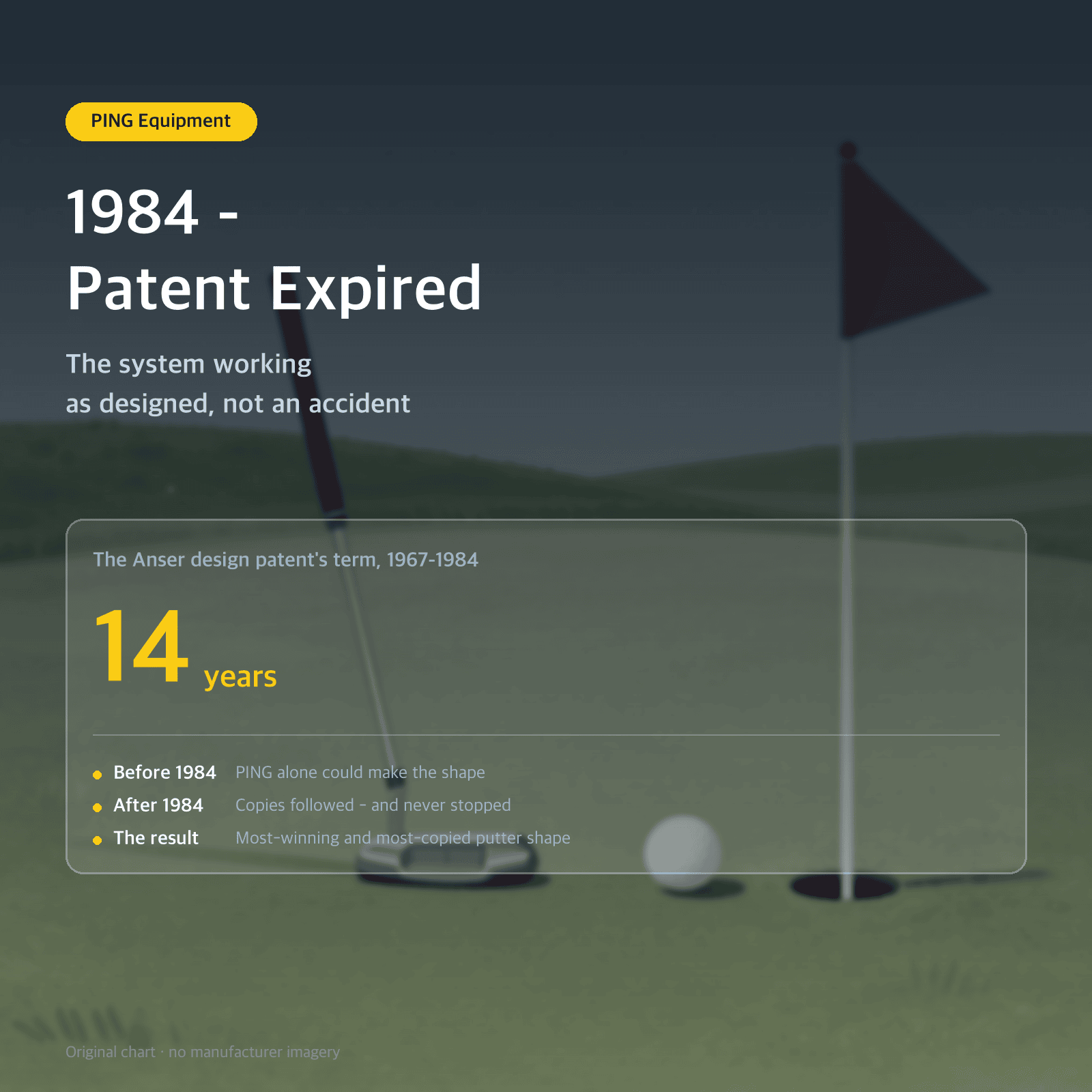
Patents run for a fixed term. This one ran 14 years.
That patent expired in 1984. And the market changed.
1. What a patent protects, and what it doesn't
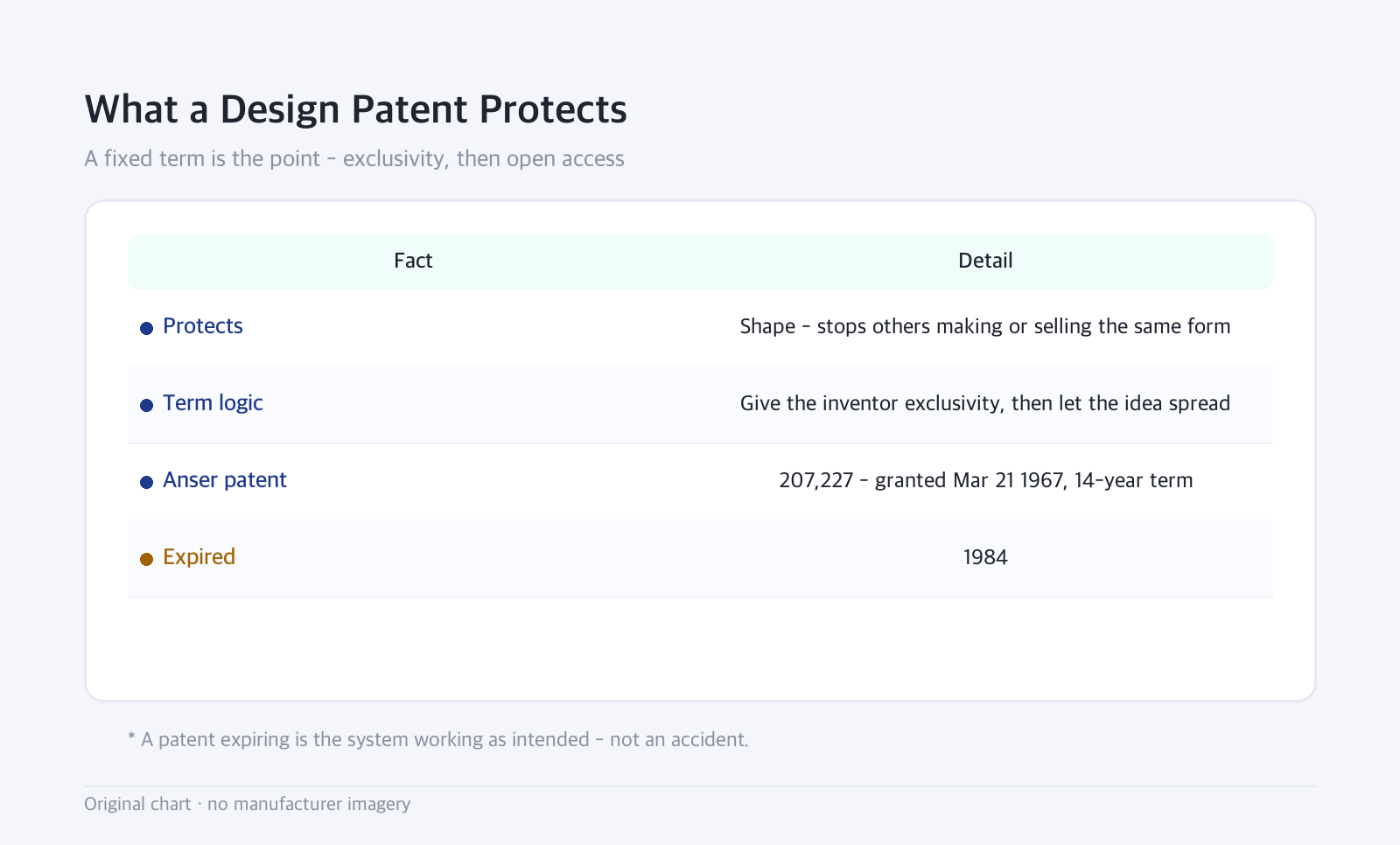
A design patent protects shape. It stops another company from making and selling the same form.
The reason for a fixed term is straightforward: give the inventor a period of exclusivity, then let anyone use it, so the underlying idea can spread.
So a patent expiring is the system working as intended. It is not an accident.
For the Anser: patent 207,227 was granted March 21, 1967, with a 14-year term.
2. After 1984 — copies followed
Once the patent expired, other manufacturers began producing the same shape.
And that trend was not temporary. It has continued to this day.
The Anser is often described as the most-winning and most-copied putter shape in history. Both records come from the same cause. It performed well, so it was copied widely; it was copied widely, so more tournaments were won with that shape.
Look at blade putters on the market today and a large share follow this shape. That's why "Anser-style" functions almost as a generic term for the shape.
3. Was copying purely bad for the original?
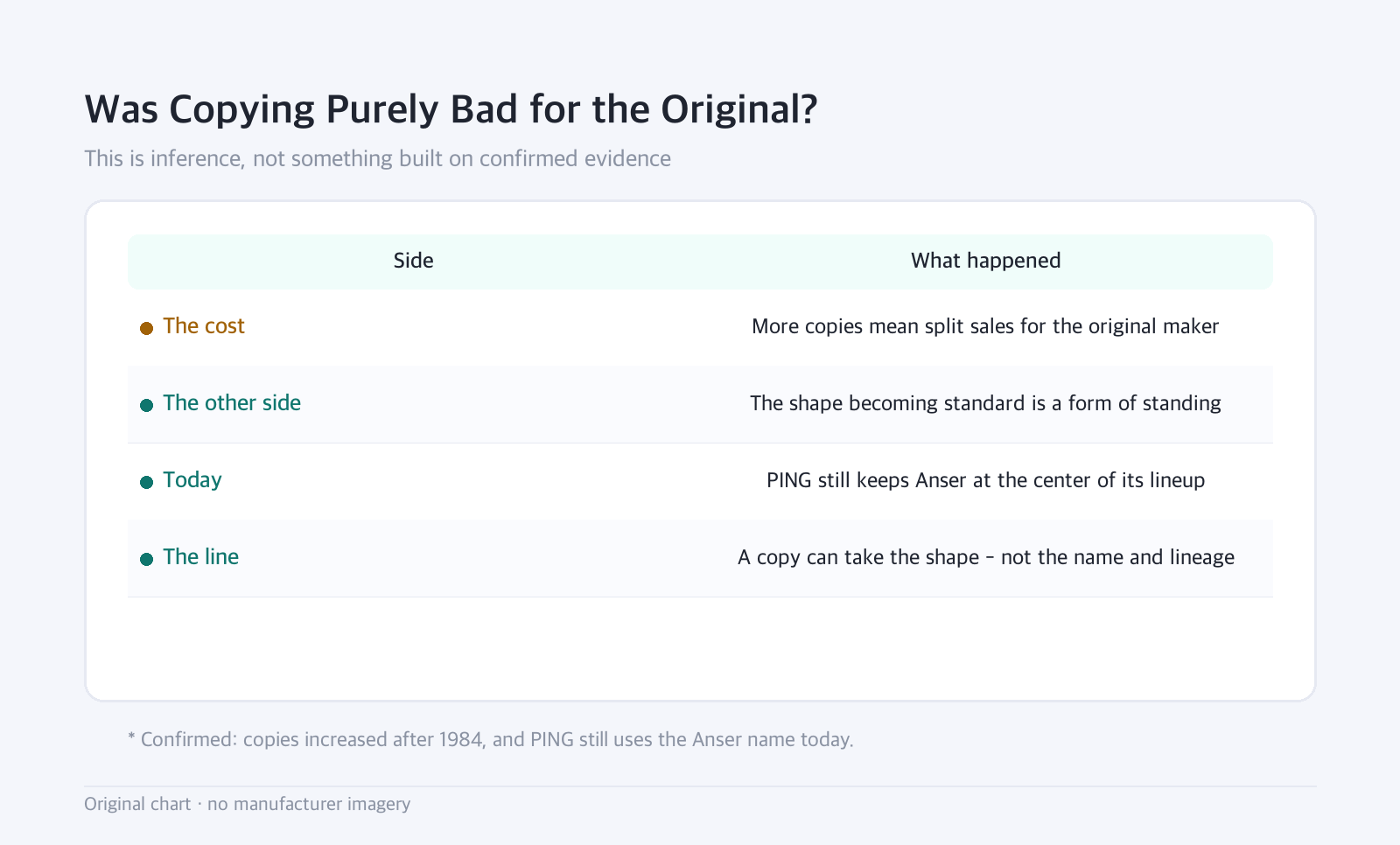
From here, this is inference, and it's marked as such.
More copies mean the company that made the original splits its sales. That's a loss.
But there's another side. The shape becoming the standard is itself a form of standing. Being the origin of a form that everyone else replicates isn't something money can easily buy.
In practice, PING still keeps the Anser name at the center of its lineup. The current Scottsdale line covered separately still carries Anser, Anser 2D, and Anser 4.
A copy can take the shape. It cannot take the name and the lineage.
This paragraph is not built on confirmed evidence. What is confirmed is that copies increased after the patent expired, and that PING still uses the Anser name today.
4. Another case where a patent shaped a market
The Anser is not the only case where a patent shaped a golf market.
The Haskell ball is another. A rubber-core, wound-thread ball was filed in 1898 and granted a US patent on April 11, 1899. That ball, capable of flying 250 yards (229 m), pushed gutta-percha balls out of the market.
Line the two up and the structure is the same:
- A new construction is developed
- A patent gives it a period of exclusivity
- During that period, the shape becomes the standard
- Once the patent expires, everyone makes it
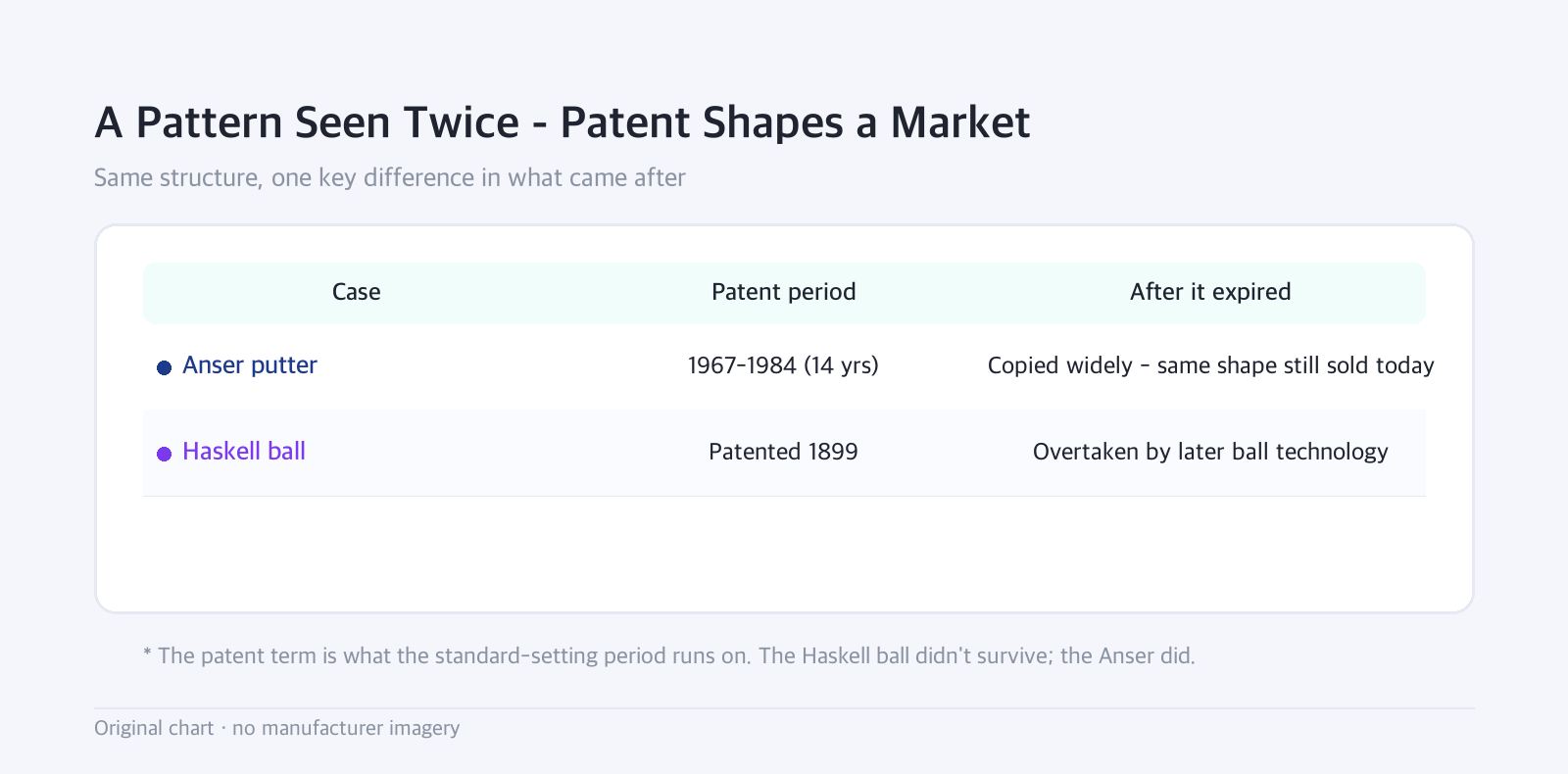
The patent term is what the standard-setting period runs on.
There is one difference between the two cases. The Haskell ball was overtaken by later technology. Wound-thread balls aren't made anymore.
The Anser was not. The same shape has been sold for 60 years. Ball construction and materials kept changing; the putter shape did not.
5. What this means when choosing a putter today
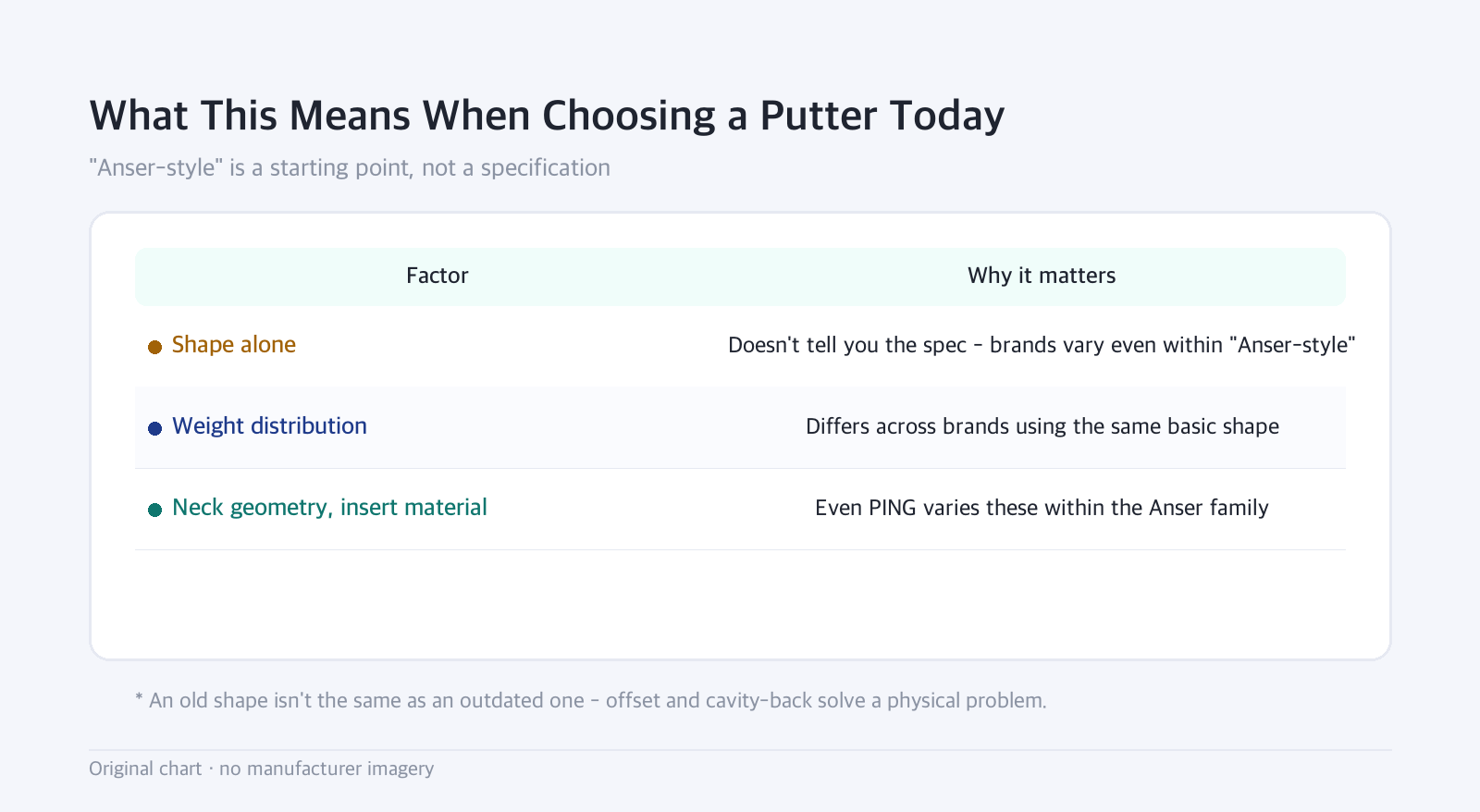
There's a practical takeaway in this history.
Even within "Anser-style," brands differ. Similar shapes still vary in weight distribution, neck geometry, and insert material. As covered separately in a piece on PING's putter lineup, the company varies the neck within the same Anser family to change balance.
Choosing by shape alone gets it wrong. "Anser-style" is a starting point, not a specification.
And an old shape isn't the same as an outdated one. Offset and cavity-back weighting solve a physical problem, which is why they don't go out of style. There's a reason this design has lasted 60 years.
6. Who this is useful for
Based on what could be confirmed:
- Golfers choosing a blade putter — much of the market descends from the same lineage.
- Golfers who've heard the term "Anser-style" — it was originally the name of one company's model.
- Golfers curious how equipment technology spreads — a case study in how a patent term creates a standard.
- Golfers skeptical of older designs — there's a physical reason this one has lasted 60 years.
This is less useful for:
- Golfers looking for a zero-torque putter — that's a different lineage.
- Golfers comparing current product specs — shape alone doesn't tell you the spec.
7. What we could not confirm
- The exact expiration date — we confirmed 1984, but not why it differs from simply adding 14 years to the 1967 grant date.
- How many brands produced copies.
- How PING responded to the copies — we could not confirm whether there was litigation or other action.
- Sales figures before and after the patent expired.
- The design-patent term rules in effect at the time.
- The current market share of Anser-style putters.
In one line
The Anser's design patent expired in 1984, and copies followed — a trend that continues today.
That's why the Anser became both the most-winning and most-copied putter shape. Both records share the same cause.
A patent expiring is not an accident — it's the system working as designed. The inventor gets a period, then everyone gets access. In the process, one company's model name became a generic term for a shape.
The years and patent details here are drawn from confirmed sources; inference is marked as inference.
This piece summarizes general instruction concepts and is not personalized coaching advice. Ball flight fixes depend on individual swing mechanics — a launch monitor session or certified instructor can confirm what applies to you.