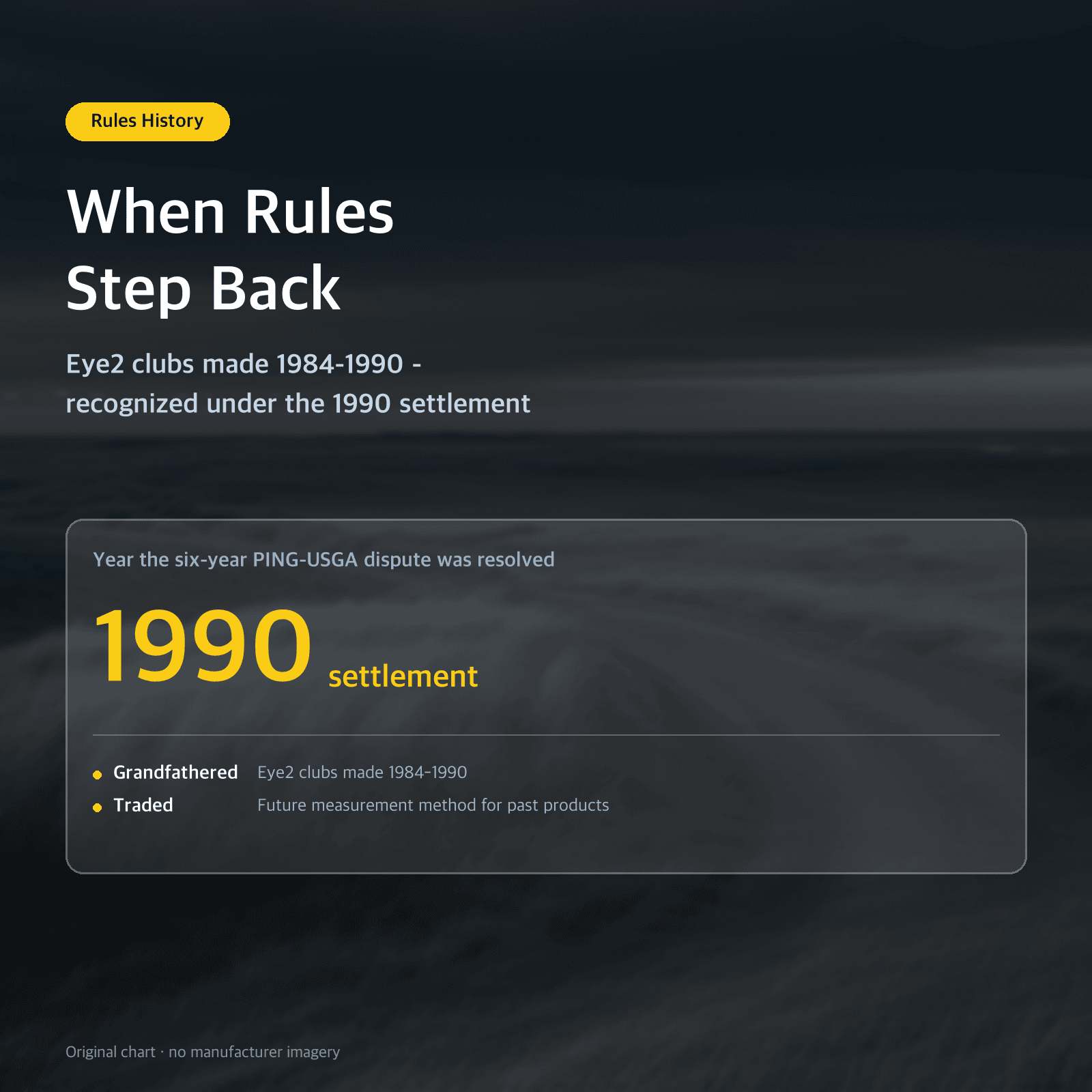
A companion piece, covered separately, described the six-year dispute between PING and the USGA. The USGA side was settled in 1990, and one condition of that settlement stood out.
Eye2 clubs produced between 1984 and 1990 were grandfathered in.
This piece looks at what that means, and why golf's rules need this kind of mechanism at all.
1. What grandfathering is
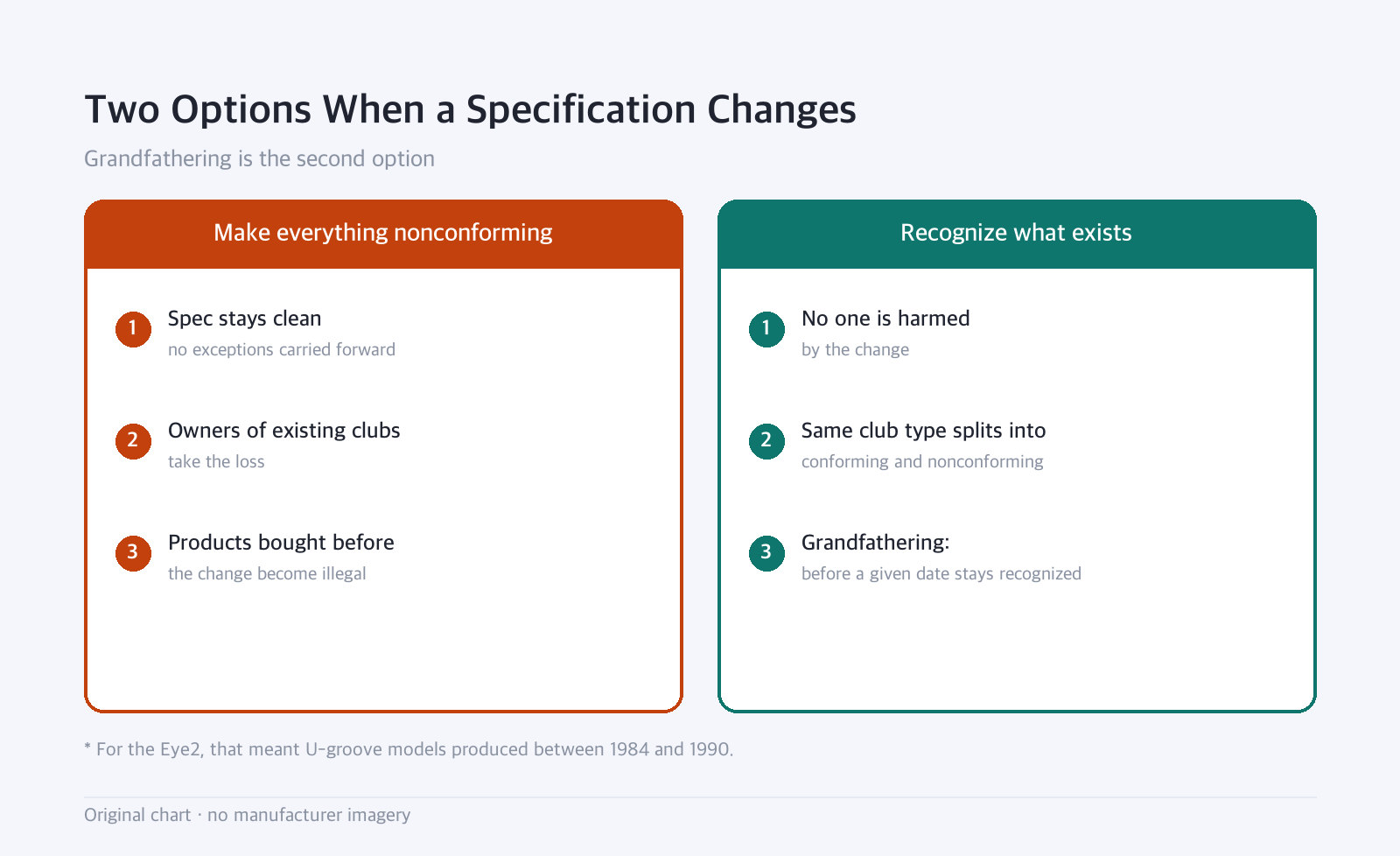
When a specification changes, a problem follows: what do you do about products already made and sold?
There are two options.
- Make everything nonconforming — the specification stays clean, but people who already bought the product take the loss
- Recognize what already exists — no one is harmed, but the same type of club now splits into conforming and nonconforming
Grandfathering is the second option — treating anything made before a given date as still recognized.
For the PING Eye2, the clubs affected were U-groove models produced between 1984 and 1990.
2. It became a bargaining chip
Looking again at the settlement, a structure shows up.
- What PING gave up — matching its tooling to the USGA's measurement method going forward
- What the USGA gave up — recognizing what had already been made
Essentially, the future was traded for the past.
For PING, this prevented already-sold clubs from becoming illegal after the fact. Given how much volume had reached the market, the potential damage would have been significant.
For the USGA, this secured a unified measurement standard going forward. A single agreed method reduces future disputes.
Both sides got something out of it. That's likely why the settlement held.
3. Why golf's rules need a mechanism like this
Grandfathering isn't rare in golf's rules. There's a structural reason for it.
Equipment lasts a long time. Many golfers use the same set of clubs for over a decade. Requiring everyone to replace everything every time a specification changes would be unworkable.
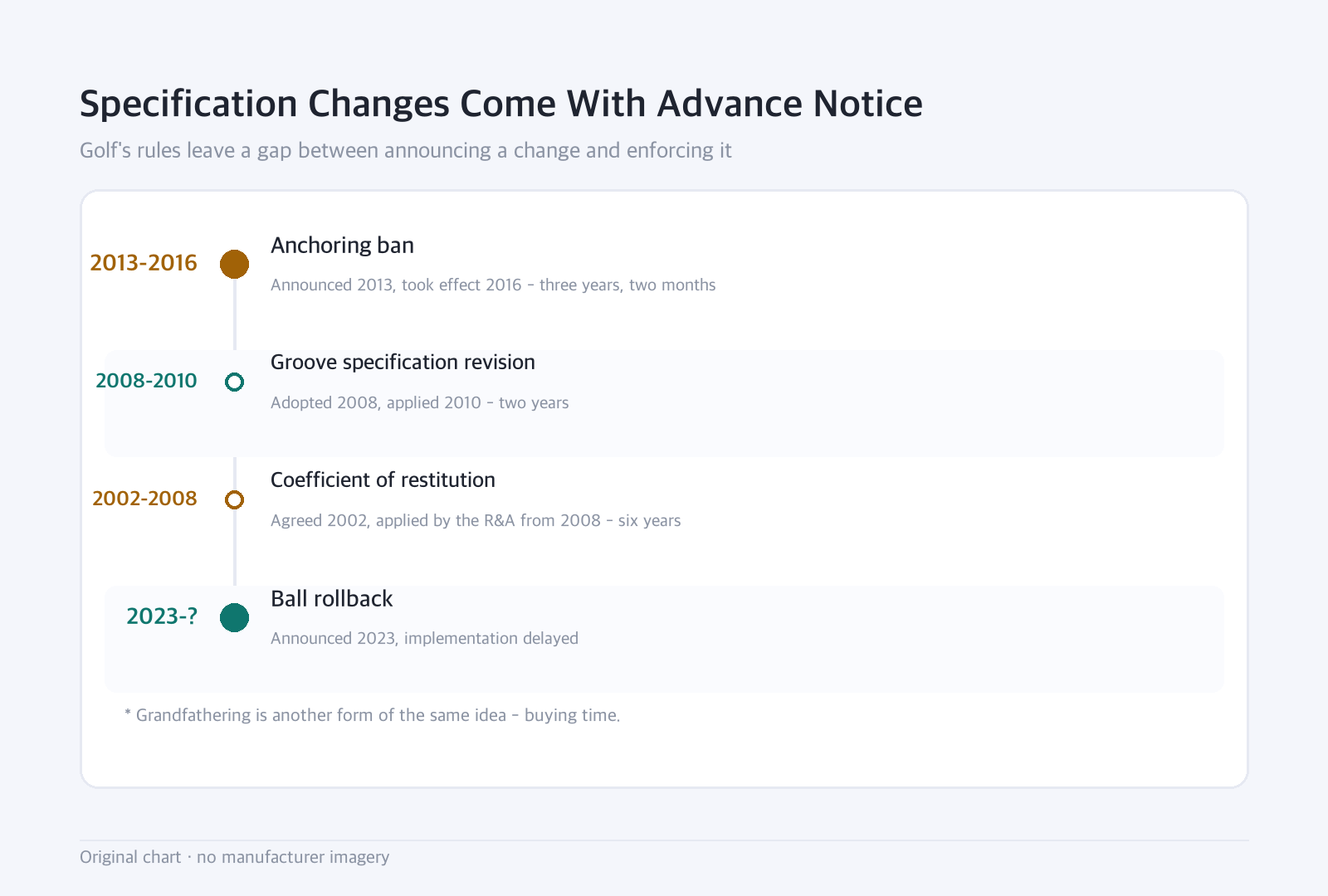
Specification changes come with advance notice, as other examples covered separately make clear:
- Anchoring ban — announced 2013, took effect 2016. Three years, two months.
- Groove specification revision — adopted 2008, applied 2010. Two years.
- Coefficient of restitution — agreed 2002, applied by the R&A from 2008. Six years.
- Ball rollback — announced 2023, implementation delayed.
A gap is left between announcing a change and actually enforcing it. Grandfathering is another form of the same idea — buying time.
4. So the same club can carry two statuses
There's a cost to grandfathering too. The same model can carry a different status depending on when it was made.
For the PING Eye2, clubs made between 1984 and 1990 were treated differently from those made afterward. They look identical, but their status under the specification differs.
In the secondhand market, this creates confusion. Buying a club under the same name means having to check which production period it came from.
The rule accepts some untidiness as the cost of reducing harm.
5. This pattern is still at work
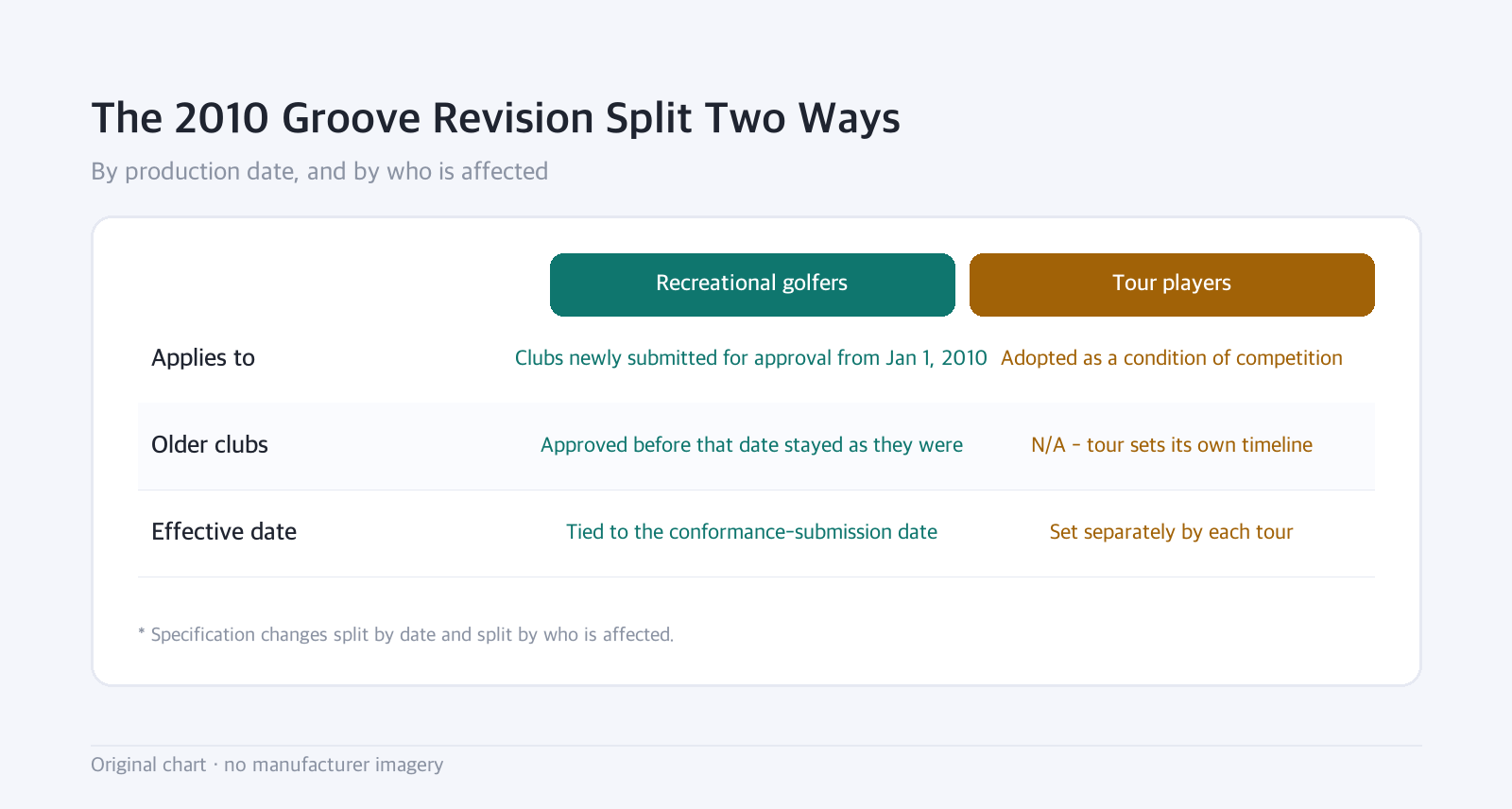
A similar structure appears in the 2010 groove-specification revision.
The new specification applied to clubs newly submitted for conformance approval from January 1, 2010 onward. In other words, clubs already approved before that date stayed as they were.
And tour-level play was handled separately. The PGA Tour, the majors, and international tours adopted the new specification as a condition of competition — meaning the applicable date differed between recreational golfers and tour professionals.
Specification changes don't happen all at once. They split by date, split by who's affected, and recognize what already exists as they move forward.
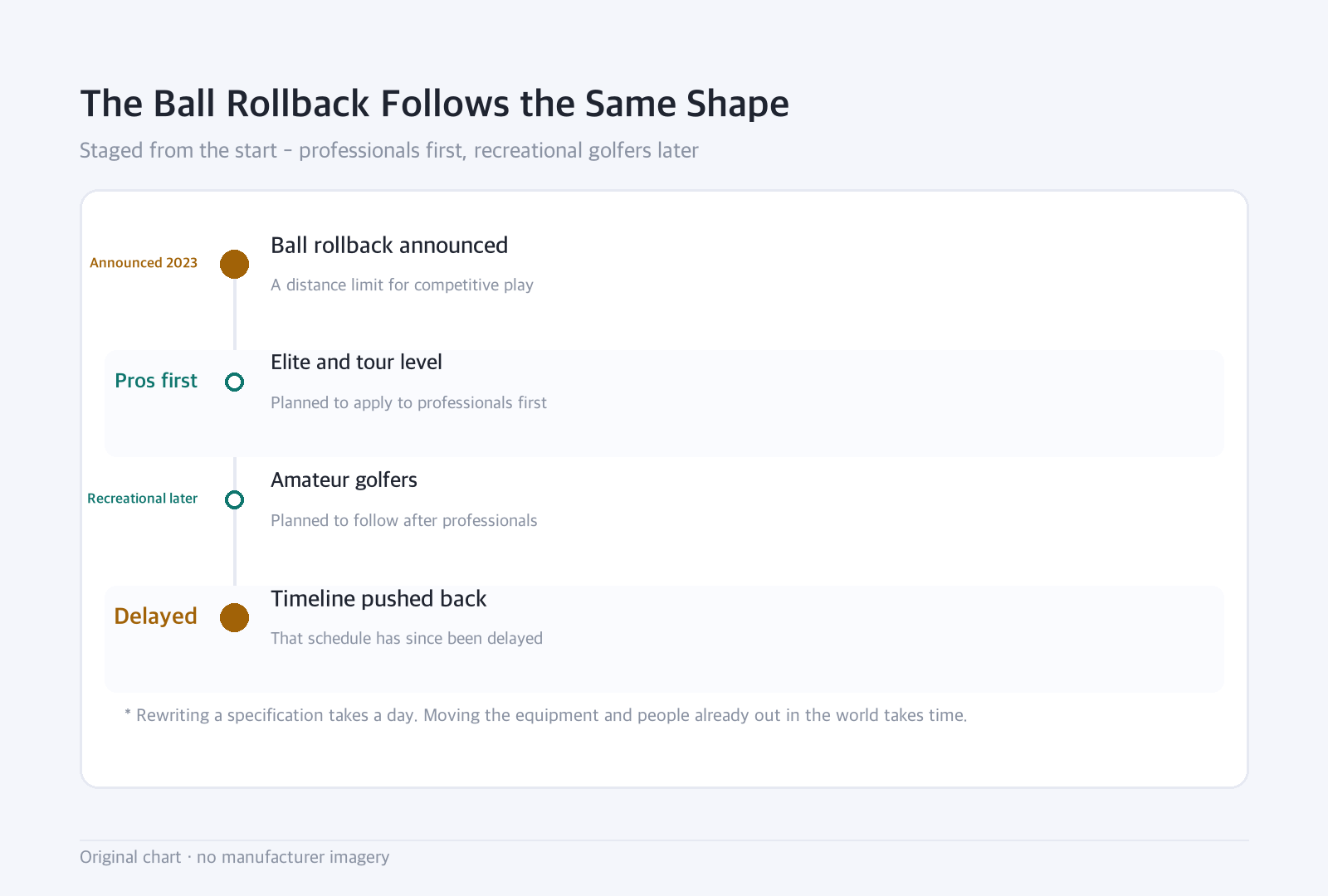
The ball rollback was designed the same way from the start — professionals first, recreational golfers later. That timeline has since been delayed.
This is why rule changes take a long time. Rewriting a specification takes a day. Moving the equipment and people already out in the world takes time.
6. Who this is useful for
Based on what could be confirmed:
- Golfers looking at secondhand clubs — the same model can carry a different regulatory status depending on production date.
- Golfers who follow specification-change news — being told a specification is changing rarely means it stops working immediately.
- Golfers using older clubs — grandfathering exists precisely so this usually isn't a problem.
- Golfers curious how rules change over time — changes get split by date and by who's affected.
This is less useful for:
- Golfers preparing for competitive play — check tournament-specific conditions, since they can differ.
- Golfers who only need the current specification — this piece is about how change happens, not the current spec itself.
7. What we could not confirm
- Whether grandfathered Eye2 clubs still conform today — we could not confirm how they were treated after the 2010 specification revision.
- Why 1984 was chosen as the cutoff date.
- The volume of clubs affected by the grandfathering.
- Exactly when the groove specification applies to recreational golfers — we could confirm only the conformance-submission date.
- How individual national or regional golf associations apply this.
- Other cases where grandfathering has been applied.
In one line
The core of the 1990 settlement was "clubs produced between 1984 and 1990 are recognized."
PING gave up its future measurement method; the USGA gave up its claim on past products. The future was traded for the past.
The reason this kind of mechanism exists is straightforward. Equipment lasts a long time, and specifications change. Without a bridge between the two, golfers take the hit every time a rule changes.
There's a cost too. The same model ends up with two statuses. It's a choice that accepts some untidiness in exchange for reducing harm.
The years and terms here are drawn from confirmed sources; anything we could not confirm is marked as such.
This piece summarizes general instruction concepts and is not personalized coaching advice. Ball flight fixes depend on individual swing mechanics — a launch monitor session or certified instructor can confirm what applies to you.